Introduction
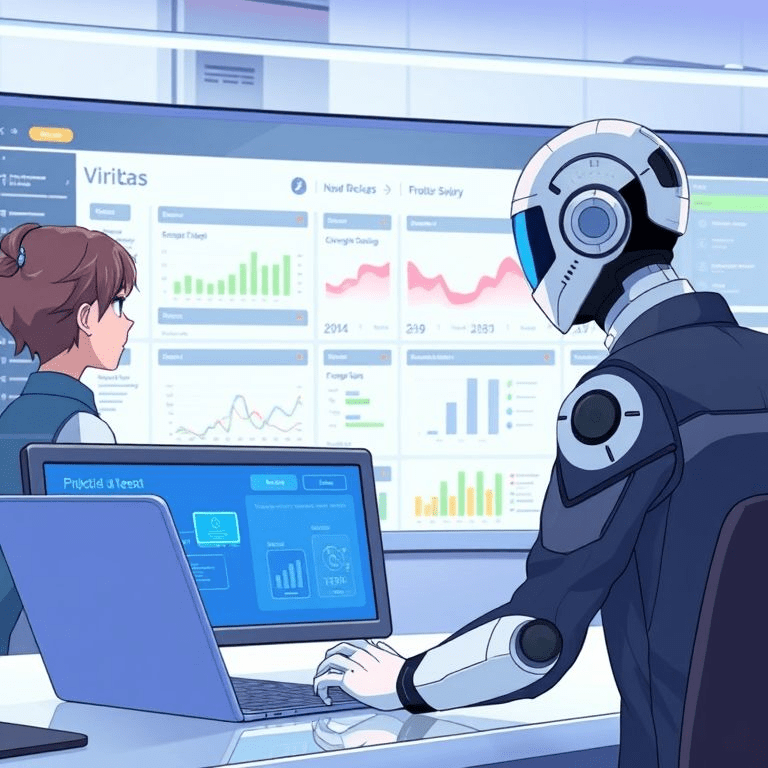
Asana, a leading work management platform, has unveiled its latest innovation: AI-powered collaborative agents designed to transform team productivity and streamline workflows. These intelligent agents aim to automate routine tasks, provide intelligent suggestions, and facilitate seamless collaboration among team members.
The Rise of AI in Work Management
The integration of artificial intelligence into work management tools has been gaining momentum in recent years. Companies are increasingly adopting AI to enhance efficiency, reduce manual effort, and improve decision-making processes. Asana’s introduction of AI Teammates marks a significant step in this evolution, offering advanced capabilities to support teams across various functions.
Features of Asana’s AI Teammates
Asana’s AI Teammates are designed to understand the context of all work across an organization and how that work gets done. A single agent can support multiple teams simultaneously, continuously improving and adapting from human feedback to increase the velocity and quality of collaborative work across the business. These agents are quick to deliver results and impact across mission-critical functions for Asana customers.
Marketing
In the marketing domain, an AI Teammate can serve as a Campaign Strategist that drafts campaign briefs, tracks deliverables, and reports on ROI. It can also act as a Creative Partner, helping to accelerate creative development by drafting content, brainstorming variations, and reviewing assets against brand guidelines.
IT
For IT teams, an AI Teammate can take on the role of an IT Ticketing Specialist, handling service requests by automatically categorizing and routing tickets. It can also troubleshoot issues, identify patterns and trends in recurring problems, and commit resolutions to memory to keep the knowledge base up to date.
Product and Engineering
In product and engineering, AI Teammates can be a Bug Investigator, acting as the first line of defense to interpret bug reports, consolidate duplicates, and assess severity. They can also serve as a Sprint Accelerator, tracking story progress, flagging at-risk items, and summarizing sprint outcomes.
Operations and PMO
For operations and PMO teams, an AI Teammate can act as a Launch Navigator that tracks cross-functional launches, monitors dependencies, and flags risks. Agents can also take on the role of an Insights Analyst, condensing detailed project data into concise reports that are tailored for leadership audiences.
The Technology Behind AI Teammates
Asana’s AI Teammates leverage advanced machine learning algorithms and natural language processing techniques to understand and process complex workflows. The agents are trained on vast datasets to recognize patterns, make intelligent decisions, and provide context-aware suggestions. Continuous learning from user interactions allows the agents to improve over time, becoming more effective in supporting teams.
Addressing Workplace Challenges
Despite the potential benefits, the integration of AI into the workplace raises several challenges. Concerns about job displacement, data privacy, and the ethical use of AI are prevalent. Asana addresses these concerns by ensuring that AI Teammates are designed to augment human capabilities rather than replace them. The agents are intended to handle repetitive tasks, allowing team members to focus on more strategic and creative aspects of their work.
Future Outlook
Looking ahead, Asana plans to continuously refine and expand the capabilities of its AI Teammates. The company aims to incorporate user feedback to enhance the agents’ effectiveness and adaptability. As AI technology evolves, Asana envisions a future where AI Teammates play a central role in facilitating seamless collaboration and driving productivity across organizations.
Conclusion
Asana’s introduction of AI-powered collaborative agents represents a significant advancement in the realm of work management. By automating routine tasks and providing intelligent support, these agents have the potential to revolutionize how teams collaborate and achieve their goals. As AI continues to evolve, its integration into work management platforms like Asana will likely become more prevalent, offering organizations new tools to enhance efficiency and drive success.